
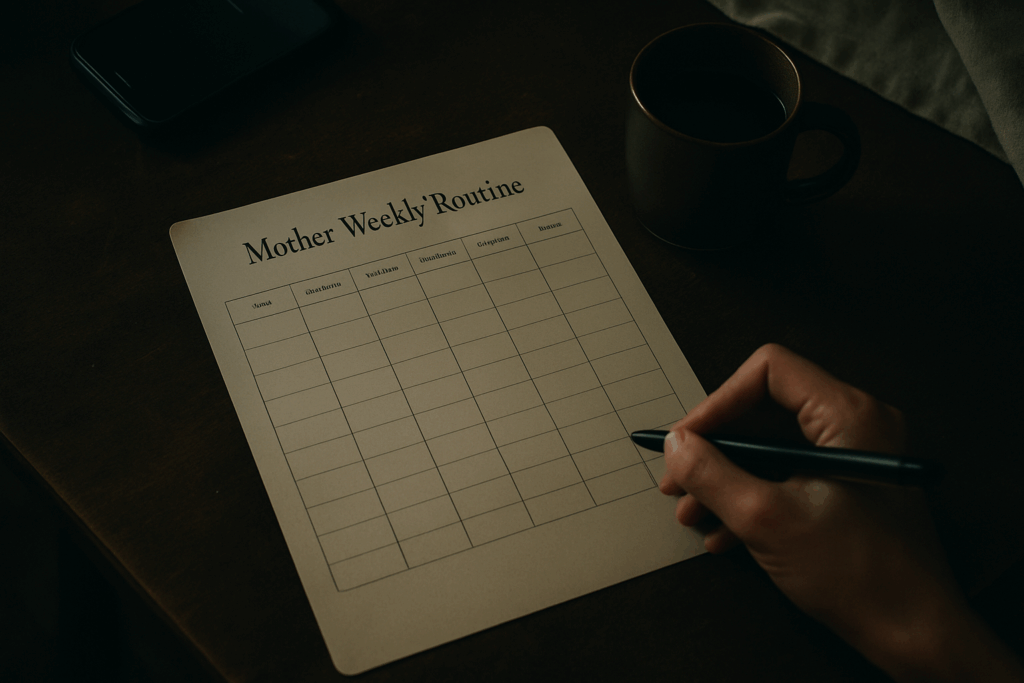
What Isn’t Working (And Why It’s Not Your Fault)
Moms are handed color coded planners with space for every hour of the day as if that’s ever how real life plays out. You start with the best intentions: block the time, write the lists, add the reminders. Then life hits. A sick kid, spilled cereal, a work call that runs long. Suddenly, that perfect plan is out the window by 9:15 a.m.
Part of the problem? The expectations we’re handed are built for Pinterest, not people. Scroll through social media and everyone else seems to have it together. Their homes are spotless, their meals are home cooked, and every family outing looks like a magazine spread. Meanwhile, you’re reheating coffee for the third time and hoping no one notices you’re wearing yesterday’s leggings. Again.
Traditional time management advice made by people who don’t understand the mental load of motherhood just doesn’t cut it. It’s made for folks with fewer wild cards, fewer interruptions, and way more backup.
So if your planner feels like a guilt trip instead of a lifeline, you’re not the problem. The system is.
The Power of Anchoring Your Week
Creating a weekly schedule that actually works starts with realistic structure, not perfection. Instead of trying to control every hour, focus on anchoring your days around what matters most.
Step 1: Identify Your Non Negotiables
Before you can build a flexible yet functional schedule, you need to define your fixed responsibilities the parts of your day that are already spoken for:
Meals: Include prep and clean up time
Naps or quiet time: Predictable rest periods can offer key breaks
School runs: Drop off, pick up, and extracurriculars matter
Work blocks: For working moms, define when deep focus is possible
These pillars create the shape of your week and keep you grounded when things get busy.
Step 2: Use Anchor Points, Not Hourly Plans
Forget color coding every minute of your day. Instead, create anchor points natural transitions or repeated activities that give structure to your time without boxing you in.
Examples of daily anchor points:
Morning routine (before kids wake or just after breakfast)
Midday reset (after lunch or school drop off)
Evening wind down (after dinner or post bedtime)
These points help you organize tasks around your life, instead of feeling trapped by your calendar.
Step 3: Map Your Energy, Not Just Your Time
Not all hours are created equal. Your energy and your kids’ fluctuates throughout the day. When planning your week, think in terms of energy zones:
High energy zones: Ideal for focused work, errands, or workouts
Low energy zones: Great for folding laundry, quiet play, or light reading
Transitional zones: Build in buffer time between busy tasks to avoid burnout
Scheduling with energy in mind leads to better follow through and less frustration. The goal is flow, not friction.
When your week feels grounded in real life rhythms, it becomes easier to pivot without giving up. That’s the power of anchoring.
Planning Smarter, Not Harder
Time isn’t the problem task switching is. Running errands three times a week, prepping dinner from scratch every night, and catching up on screen time in scattered 15 minute bursts? That’s a schedule built for burnout. Batching tasks helps cut the mental load and frees up real hours. Group errands into one trip. Meal prep once and buy yourself four nights of peace. Limit screen time check ins to two set times a day. One mental transition instead of five makes a difference.
Then there’s the “flex day.” Think of it as a weekly pressure release valve. It’s not for catching up it’s for overflow. Life happens. Laundry piles up, kids get sick, appointments shift. Having a day already set aside for wiggle room helps keep the rest of your week intact.
Last part: pick your top 3 wins for the week. Only 3. What really matters? Maybe it’s finishing the school project, hosting dinner, or finally calling your mom. If it’s not on the top three list, let it fall. The trick isn’t to do it all it’s doing the right stuff well.
For more low effort, high impact ideas, check out these planning hacks.
Involving Kids Without Chaos

Getting kids onboard with a schedule doesn’t have to mean printing out color coded charts or organizing your life around Pinterest worthy routines. One of the simplest, most effective steps? Visual schedules. For younger kids, pictures work better than words. Use sticky notes, hand drawn icons, or a magnetic board to show what comes next breakfast, school, playtime, nap. It helps eliminate constant questions and teaches routines organically.
Another small move with a big impact: weekly family meetings. Keep them under 15 minutes. No agenda required just a casual check in. Let everyone say what’s coming up, what they’re excited (or stressed) about. Kids feel involved. You avoid surprise chaos.
And yes delegate. Even toddlers can help. Think tiny: putting spoons on the table, putting toys in a bin by color. As kids get older, up the responsibility in small, manageable ways. The goal is not perfection it’s buy in. When kids see themselves as part of the system, they’re more likely to engage with it. That’s how chaos starts turning into calm.
Digital vs. Paper: Choose What Works
Finding the right planning system isn’t about staying trendy it’s about choosing tools that actually help you manage your life as a mom. Whether you love tech or prefer the feel of pen on paper, the goal is the same: less stress, more clarity.
Best Free Apps for Mom Scheduling
You don’t need an expensive system to stay on top of your week. These free apps offer simple, effective features tailored to busy family life:
Cozi: A shared family calendar, to do lists, meal planner, and journal all in one spot
Google Calendar: Easy to sync across devices, color code for different family members
Trello: Great for visual thinkers who like to organize tasks into cards and boards
TimeTree: Calendar sharing with chat features to coordinate with your partner or older kids
Tip: Start with one app and use it consistently for a few weeks before exploring others.
How to Keep Paper Planners From Collecting Dust
Love the feel of a planner in your hands but hate that it ends up ignored after a few days? Try:
Placing it where you see it daily like your kitchen counter or nightstand
Pairing it with an existing habit, such as morning coffee or post bedtime wind down
Using it as a reflection tool, not just a to do list. Jot down wins, thoughts, or moments that matter
Choosing a format that matches your mental load daily pages for detail heavy weeks, weekly spreads for lighter ones
Syncing Planning Tools With Your Actual Lifestyle
Your system should reflect the reality of your days not an idealized version of motherhood. Ask yourself:
Do I check my phone more often than I reach for a notebook?
When do I have the 5 10 minutes to plan morning, night, or during naps?
What’s my mental bandwidth? (Digital works better for quick updates, paper can offer calm clarity.)
A hybrid approach works well for many moms:
Use a digital calendar for shared planning and reminders
Use a paper planner for journaling, mindset work, or big picture weekly visioning
The best system is the one you’ll actually use consistently, not perfectly.
Weekly Reset Ritual
Sunday night or Monday morning it’s not about which one is better; it’s about which one works for you. Some moms hit the ground running on Sunday evening, carving out 20 minutes to glance over appointments, wipe down the kitchen, and mentally shift into the week. Others aren’t wired that way. Rest might matter more. Monday morning with a strong coffee and a quiet moment may be your sweet spot. Either way, the goal stays the same: reset without overloading yourself.
A quick clean isn’t a deep scrub it’s resetting your space so Monday doesn’t feel like cleanup on aisle five. A calendar check isn’t a color coded overhaul it’s spotting the pressure points early so you can flex. And mindset prep? That’s as simple as picking one word for the week. Calm. Focus. Grace. Whatever you need.
This isn’t a ritual for ritual’s sake. It’s a habit that grounds instead of drains. Make it yours, keep it light, and use it to move into your week with a little more clarity.
Explore more grounded tips here: planning hacks
The Real Win: Consistency Over Perfection
Here’s the truth: perfect schedules don’t exist. Life happens especially when you’re managing meals, meltdowns, and meetings all in the same outfit. A plan that’s 70% done still moves the needle. Maybe you didn’t get through all your batch cooking or that one appointment had to slide. Doesn’t matter. What matters is that you showed up and kept the rhythm. That counts.
Leaving room for margin isn’t weakness it’s strategy. Build space in your week like you would a buffer zone in traffic. Things will spill over, go sideways, or just need more time than expected. Sanity lives in those margins. Trying to script every second leaves you snapped by Tuesday.
And when the week totally derails? Pivot. Permission isn’t needed from anyone except you. Whether it’s switching days, dumping a task, or changing direction completely flexibility is a skill, not a fallback. Your plan should serve you, not control you. So aim for consistent effort, not flawless execution. That’s where real progress lives.
 Drevian Xelthorne founded FP Mom Hacks to simplify the chaos of modern parenting. By combining expert advice with practical time-management strategies and healthy meal ideas, Xelthorne empowers moms to navigate family life with confidence. The platform serves as a vital resource for parents seeking both creative activities and genuine support.