
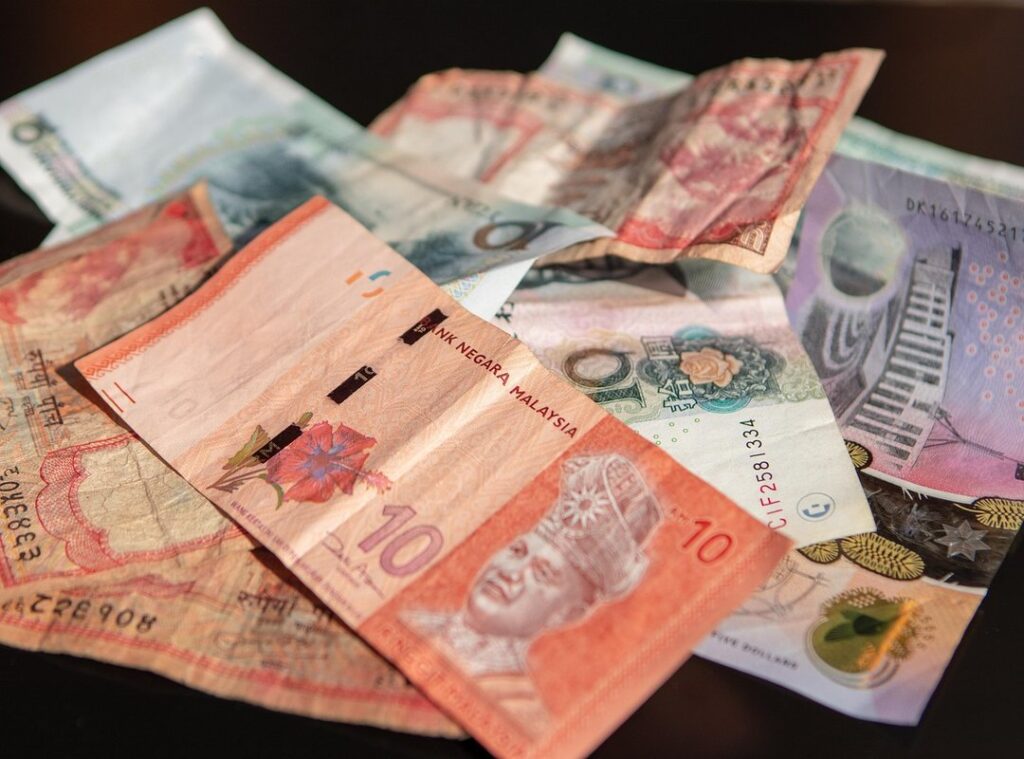
One Malaysian Ringgit (MYR) is currently worth approximately [insert current rate] Indonesian Rupiah (IDR). This rate changes every day, so it’s always a good idea to check the latest numbers.
An exchange rate is just the price of one country’s currency in terms of another. Simple, right?
The official currency codes are MYR for Malaysian Ringgit and IDR for Indonesian Rupiah. I’ll stick to these throughout, so you won’t get confused.
This article isn’t just about giving you a number. It’s about explaining what makes the satu ringgit berapa rupiah rate move up and down. And, more importantly, how you can get the best deal when you need to convert money.
By the end, you’ll have practical, actionable steps for exchanging currency, whether you’re planning a trip, doing business, or just sending money to friends and family.
What Factors Make the MYR to IDR Rate Change?
Understanding the MYR to IDR rate is like watching a seesaw. When one side goes up, the other comes down. This is because both currencies have a floating exchange rate, meaning their values are determined by supply and demand in the foreign exchange market, not by a government-set rate.
National economic health plays a big role. For instance, if Malaysia’s GDP growth is strong, it can make the ringgit more attractive. Conversely, high inflation or low interest rates can weaken it.
The same applies to Indonesia. If their economy is booming, the rupiah strengthens.
Political stability matters too. A stable political environment in either country can boost investor confidence. This leads to more capital flowing into that country, which in turn strengthens its currency.
It’s like how a steady ship attracts more passengers.
Commodity prices also have a huge impact. Both Malaysia and Indonesia rely on key exports. For Malaysia, it’s palm oil and natural gas.
For Indonesia, it’s coal. When global prices for these commodities rise, national revenues increase, making their currencies stronger.
Think of it this way: positive economic news in one country can cause its currency to ‘rise’ against the other’s. So, if you’re wondering satu ringgit berapa rupiah, it all depends on these factors. They can shift the balance, making your ringgit worth more or less rupiah.
A Step-by-Step Guide to Exchanging Ringgit for Rupiah
-
Always check the ‘mid-market rate’ first. This is the real-time, wholesale rate you see on Google or financial news sites. It’s the benchmark for a fair deal.
-
Compare your options. Banks are safe but often have poor rates. Licensed money changers usually offer the best rates for cash.
Airport kiosks? Convenient, but the most expensive.
-
Understand the full cost. Use this simple formula: (Amount in MYR) x (Offered Rate) = Total IDR. Always ask about all commissions or fees.
The advertised rate is rarely the final price.
-
Be cautious during the transaction. Use reputable, well-lit exchange offices. Count your rupiah before leaving the counter. satu ringgit berapa
Always ask for a receipt.
When you’re traveling, it’s smart to exchange a small amount at the airport for immediate needs, like a taxi. Then, exchange the larger sum at a more competitive money changer in the city.
One common question I get is satu ringgit berapa rupiah. Well, that depends on the current exchange rate, which can vary. Always check the mid-market rate to get a good idea.
Pro tip: Don’t just rely on one source. Cross-check with a few different places to ensure you’re getting the best deal.
Common and Costive Currency Exchange Mistakes to Avoid

Relying solely on airport exchange counters is a big no-no. These kiosks charge a premium for convenience, resulting in significantly less cash in your pocket.
Forgetting about hidden fees can also cost you. Some services lure customers with attractive rates but then add high ‘service fees’ or commissions that negate the benefits. It’s like getting a discount only to have it taken away at checkout.
Accepting ‘Dynamic Currency Conversion’ (DCC) is another mistake. DCC happens when a foreign ATM or card terminal offers to charge you in your home currency. Always choose to be charged in the local currency (IDR).
The exchange rates set by the machine’s bank are often terrible.
Not informing your bank about your travel plans can lead to trouble. Your debit or credit cards might get flagged for suspicious activity and frozen when you need them most. Imagine being stuck in a foreign country without access to your funds.
Not fun.
Exchanging very small amounts multiple times can eat into your money. Fixed fees can add up quickly. It’s often better to exchange larger, planned amounts less frequently.
This way, you save on those pesky transaction costs.
Let’s not forget the importance of planning. If you’re traveling to Indonesia, for example, knowing the rate of satu ringgit berapa rupiah can help you make more informed decisions. A little research goes a long way in saving you money.
How to Get the Most Rupiah for Your Ringgit
The most important takeaway is that being prepared is key to saving money. A few minutes of research can result in a much better exchange rate.
Always know the current mid-market rate. Compare rates away from the airport. Always pay in the local currency when using cards.
While rates will always change, these strategies for getting the best value will remain constant.
Empower yourself with this knowledge as a tool for smarter travel and financial management.
satu ringgit berapa rupiah is a common question, but the answer varies. Don’t just exchange your money; maximize its value by following these simple rules.
 Betty Bolestiers has opinions about family activities and projects. Informed ones, backed by real experience — but opinions nonetheless, and they doesn't try to disguise them as neutral observation. They thinks a lot of what gets written about Family Activities and Projects, Healthy Meal Ideas for Kids, Parenting Tips and Hacks is either too cautious to be useful or too confident to be credible, and they's work tends to sit deliberately in the space between those two failure modes.
Reading Betty's pieces, you get the sense of someone who has thought about this stuff seriously and arrived at actual conclusions — not just collected a range of perspectives and declined to pick one. That can be uncomfortable when they lands on something you disagree with. It's also why the writing is worth engaging with. Betty isn't interested in telling people what they want to hear. They is interested in telling them what they actually thinks, with enough reasoning behind it that you can push back if you want to. That kind of intellectual honesty is rarer than it should be.
What Betty is best at is the moment when a familiar topic reveals something unexpected — when the conventional wisdom turns out to be slightly off, or when a small shift in framing changes everything. They finds those moments consistently, which is why they's work tends to generate real discussion rather than just passive agreement.
Betty Bolestiers has opinions about family activities and projects. Informed ones, backed by real experience — but opinions nonetheless, and they doesn't try to disguise them as neutral observation. They thinks a lot of what gets written about Family Activities and Projects, Healthy Meal Ideas for Kids, Parenting Tips and Hacks is either too cautious to be useful or too confident to be credible, and they's work tends to sit deliberately in the space between those two failure modes.
Reading Betty's pieces, you get the sense of someone who has thought about this stuff seriously and arrived at actual conclusions — not just collected a range of perspectives and declined to pick one. That can be uncomfortable when they lands on something you disagree with. It's also why the writing is worth engaging with. Betty isn't interested in telling people what they want to hear. They is interested in telling them what they actually thinks, with enough reasoning behind it that you can push back if you want to. That kind of intellectual honesty is rarer than it should be.
What Betty is best at is the moment when a familiar topic reveals something unexpected — when the conventional wisdom turns out to be slightly off, or when a small shift in framing changes everything. They finds those moments consistently, which is why they's work tends to generate real discussion rather than just passive agreement.